Life Is Evolving Rapidly- Major Shifts Defining Life In The Years Ahead
Wiki Article
The Top 10 Digital Tech Trends Reshaping The Near Future And What Comes Next
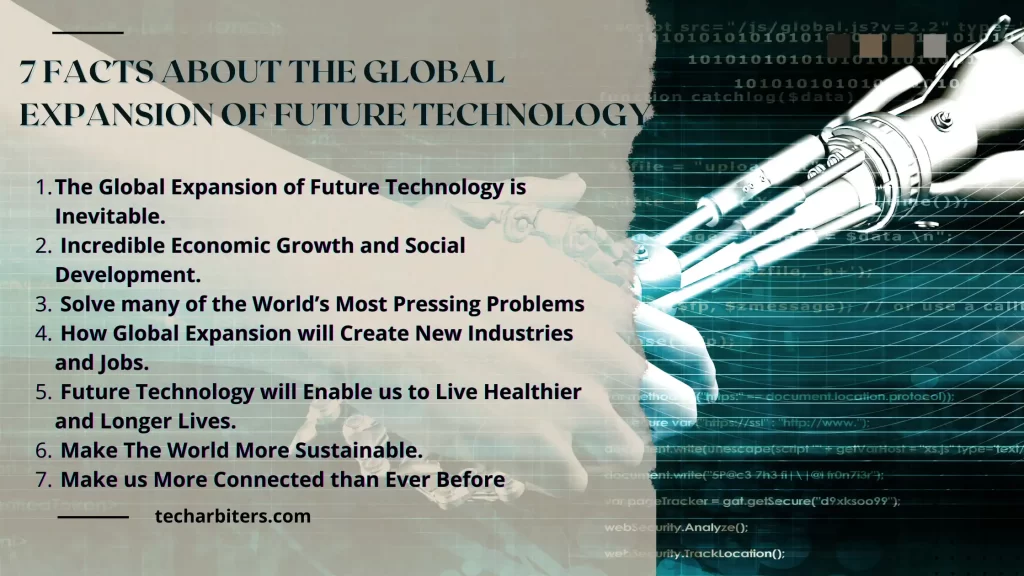
The speed of technological change continues to accelerate. From how companies operate to how individuals interact with all around them the technology continues to revolutionize all aspects of modern life. Some of these changes are in the making for a long time but are now at the point of critical mass, whereas other shifts have occurred quickly and have caught entire industries by surprise. If you're in the tech industry or are simply living in a globe that is increasingly shaped and defined by it, understanding where things are moving will give you a real edge. Here are ten key digital technology trends that are the most significant in 2026/27 and beyond.
1. Artificial Intelligence Changes From Tool to TeammateAI is now no longer something of a novelty or a shortcut to something that is more integrated. In all industries, AI systems operate as active collaborators instead of inactive assistants. In the world of software development AI develops and reviews codes with engineers. When it comes to healthcare, it can detect diagnoses that human eyes might not see. In the areas of marketing, production of content or legal service, AI deals with first drafts and analysis routinely so humans can focus more on thinking higher levels. It's not about replacing, but more about changing the way that human work is when the repetitive layer is handled automatically.
2. The Growth Of Agentic AI SystemsA step ahead of standard AI assistants and agents, agentic AI refers to machines that are capable of planning and executing tasks that require multiple steps. Instead of responding to one prompt These systems break down the complex goals, establish the best course of action, draw upon a variety tools and information sources, and move with no constant input from humans. For businesses, this could mean AI capable of managing workflows that conduct research, handle emails, and maintain systems in a manner that requires minimal supervision. For consumers, it is digital assistants that actually perform tasks, not simply answering questions.
3. Quantum Computing Enters Practical TerritoryQuantum computing has spent years still in the realm of potential theoretical possibilities. That is changing. While quantum computers for all purposes remain a work-in-progress however, the specialized systems are starting to demonstrate real advantages in the area of drug discovery sciences, logistics optimisation and financial modelling. Big technology companies and government are making more investments into quantum-related infrastructure. The competition to achieve meaningful commercial advantage is getting more intense. Companies that pay attention now are better off as the technology develops.
4. Spatial Computing, as well as Mixed Reality Expand Their FootprintIn the wake of the commercial launch of top-of-the-line mixed reality headsets spatial computing is finding applications far beyond entertainment and gaming. Architecture firms make use of it for deep review of designs. Surgeons rehearse complex procedures in virtual environments. Remote teams work together within virtual spaces that are shared in three dimensions. As hardware gets lighter and less expensive, spatial computing is set to become a standard layer of how digital data is accessed through, navigated, and ultimately acted on both in professional and everyday contexts.
5. Edge Computing Brings Processing Closer to the SourceCloud computing has changed the way things are possible through centralising processing power. Edge computing is decreasing its centralisation and with great reason. In processing information closer to the place it is generated, whether on the floor of a factory, a hospital ward, or inside an automobile that is connected edge computing can reduce delays, improves reliability and reduces the bandwidth demands of constant cloud-based communication. For applications where real-time response is not a must, from autonomous vehicles to industry automation through smart urban infrastructure, edge computing is increasingly important.
6. Cybersecurity Evolves Into A Continuous DisciplineThe threat world has gotten too big and too complex for an old-fashioned model of periodic audits and patching reactively. In 2026/27the most serious organizations adopt cybersecurity as a permanent and a broader organisational discipline, rather than an IT department's responsibility. Zero-trust architecture, which assumes all users and systems are reliable by default, is becoming standard practice. AI-driven software monitors networks in real-time and detect anomalies prior to they become security threats. The human element remains the most vulnerable vulnerability, thus making security education and culture crucial as any technology solution.
7. Hyperautomation connects the Dots Between SystemsHyperautomation is a blend of AI machine learning and robotic process automation to detect and automate complete workflows, rather of a handful of tasks. Like simple automation it concentrates on the connective tissue between the systems that used to require humans to coordinate and eliminates friction completely. Industries from insurance and banking as well as supply chain administration and public administration are discovering that hyperautomation can not just lower costs, it transforms what a company is capable of delivering with speed.
8. Green Tech And Sustainable Digital InfrastructureThe environmental impact for digital infrastructure is undergoing greater investigation. Data centres consume enormous quantities of energy. The growing number of AI training tasks has driven that use to a much higher level. As a result, the industry are investing more in energy-efficient hardware, renewable-powered facilities, fluid cooling equipment, as well as cleverer ways to handle the workload. For companies with ESG commitments that require carbon emissions, the footprint of your technology is no longer something that can be ignored in the background.
9. The Democratisation Of Software DevelopmentAI-powered low-code and no-code platforms let software creation be within users with no previous programming knowledge. Natural language interfaces and visual development environments mean that domain experts can develop applications that are functional which automate complicated processes and integrate data systems, without being dependent on third party developers. The pool of experts capable of developing digital solutions is expanding rapidly and the consequences for business agility and innovations are immense.
10. Digital Identity And Data Sovereignty Take Centre StageAs our lives become increasingly digital The questions of who has personal information and how identities are copyright are more pressing than being merely peripheral issues. Identity frameworks with decentralisation, privacy-preserving technology, and better rights for data portability are taking off. Governments and platforms alike are moving towards models that give users genuine control over their digital identities and better insight into the way in which their data is utilized. It is a direction that has been decided, even if the course remains undetermined.
The trends discussed above aren't singular developments. They feed off and accelerate one another leading to a digital era that is developing faster than ever before in time. The need to stay informed is no longer just a matter of technologists. In a world that is affected by digital technologies, it's becoming increasingly relevant for every person. To find additional insight, visit some of the best nulageskoll.se/ and find expert analysis.
 Ten Social Media Changes Impacting Culture In 2026
Social media has become embedded in the daily lives of people that detaching its influence from the wider culture is becoming increasingly difficult. It affects how people form opinions, develop identities in their lives, consume entertainment, track updates, develop relationships and take part in public life. The platforms themselves continue to develop rapidly, driven by competition, regulation and the constant demand to hold and capture the attention of people. The 2026/27 era is a social media landscape that is more fragmented, more awash in AI, and more relevant than at any other date. Here are 10 digital trends that influence culture to 2026/27.
1. AI-Generated Content Soars Every PlatformThe number of AI-generated posts on Facebook and other social networking platforms has reached an amount that is fundamentally altering the digital landscape. Images, videos, written posts, and whole accounts that generate content in machine speed are an essential feature of every major platform. The implications are diverse from relatively benign, AI-assisted creators creating content more quickly but also the extremely destructive artificial misinformation, fabricated characters, and manufactured consensus operating at a speed that human moderation can't keep pace with. The ability to distinguish natural-made from artificial-generated content evolving into a technical challenge and a key cultural ability.
2. Short-Form Video Remains Dominant But EvolvesShort-form video emerged as the dominant content format of this time, and this dominance will continue into 2026/27. What is changing is the quality of the content as well as those who consume it. Creators are creating more sophisticated formats, even within the limitations of short-form and audiences are showing more interest in quality media that makes use of the format to its advantage rather than just optimizing the format for the initial three seconds of their attention. Platforms are also experimenting by experimenting with longer formats and stronger interaction mechanics in order to move beyond the scroll to build the type of ongoing time-on the platform that results in commercial value.
3. The Creator Economy develops and It StratifiesThe market for creators has expanded into a substantial economic sector, but the distribution of its rewards is becoming increasingly disproportional. A small portion of creators at the top of the market for attention earn huge incomes, while the vast middle of the market struggles to convert attention into sustainable income. Platform algorithm changes, increasing the level of saturation of content, as well as the struggle to stand out in an environment that AI is able to replicate content at the surface for free are all adding pressure on mid-tier creators. The most resilient businesses for creators to 2026/27 depend on those built around genuine community, a distinctive perspective, as well as direct monetisation models that do not rely on algorithms of platforms.
4. Decentralised And Alternative Platforms Gain GroundIn the wake of disillusionment from centralised platforms, fueled by fears about algorithmic manipulation and data privacy issues, content consistency, and concentration of power in a comparatively small handful of technology companies can be a catalyst for growth in alternative social networks that are decentralised. Federated social networks based on the open protocol, specialised communities serving particular interests groups, and subscriber-supported models that align platform incentives with user value rather than the needs of advertisers have all found audiences. The main platforms have huge scale advantages, but their ecosystems are becoming meaningfully more diverse.
5. Social Commerce Develops into a Main Shopping ChannelThe direct integration of shopping into social media feeds as well as live streams and creator content has resulted in a shopping behaviour shift that is most noticeable among younger age groups. Social commerce, in which users are able to discover or purchasing products on an online platform, is growing rapidly across every major social network. Live shopping and other formats, first seen in Asia and now expanding across the globe incorporate retail and entertainment with a focus on turn-over rates and an extremely high level of engagement. For brands, the influencer relationship has evolved from awareness to into direct sales channels that have tangible revenue cool training attribution.
6. Authenticity And Raw Content Insist Against PolishA reaction against years of highly produced, aspirationally created social media content is growing a desire for rawness, spontaneity, and visible imperfections. Content creators who are unfiltered which express genuine uncertainty and lives that appear recognisably human rather than aspirationally impossible are enjoying a thriving audience that polished media is increasingly struggling to achieve. This isn't an outright refusal to be a quality-conscious person, but rather an adjustment of what quality refers to in an environment where authenticity is becoming a source of competitive advantage. The irony that raw authenticity can become as carefully crafted as other formats of content isn't lost on the more self-aware parts of the internet.
7. Mental Health And Platform Design Face Greater ScrutinyThe connection between the use of social media and the mental state, specifically in young people remains a subject of significant studies, regulatory attention and public discussion. Age verification standards, screen time devices with transparency obligations for algorithmic algorithms, and restrictions on certain content recommendations are all in the process of being implemented or being considered across a wide range of jurisdictions. The design decisions of platforms that exploit psychological weaknesses to maximize involvement are being scrutinized and is beginning to trigger real modifications to the way products can be designed and governed. The disconnect between what platforms know about the impact of their design decisions as well as what they publish publicly is a major point of dispute.
8. Communities and Interest-based Spaces Become More Important In importanceThe broad public format of social media in which everyone is posting to everyone about everything, has demonstrated its shortcomings in terms of violence, toxicity, and loudness, smaller less specifically-focused community spaces are increasing in appeal. Subreddits, Discord server, Substack communities as well as private chat rooms and niche forums organised around particular topics or identities are places many are finding the internet connection and the conversation that they no longer expect from general-purpose platforms. This shift is a reflection of a wider recognition that the scale that creates platforms is also what makes them difficult environments for genuine communities to build.
9. Political And News Content Faces Platform RetreatA variety of social media platforms took deliberate steps that have reduced the prominence of news and political articles in their recommendation algorithms citing the toxicity and moderation burden it generates relative to the user experience. What this means for the public discourse the media, journalism and political communications are significant, and they're being debated. For news organizations that have built distribution strategies around recommendations from friends, the shift in the direction of social media poses a huge challenge. If political actors are used to making use of social media platforms as direct communications channels, it is forcing a rethinking of digital strategy. The bigger question of what role social media platforms can play in democratic information ecosystems remains unclear.
10. Digital Identity and Online Reputation are Long-Term AssetsThe development of a web presence over the course of decades or years is now something that people can manage with greater prudence. Digital identity, which is the quantity of information that a person has posted, shared, built and cultivated across different platforms, could have real-world implications for relationships, careers and possibilities that weren't fully appreciated prior to the advent of social media. The control of online reputation such as what content to share in the first place, what to curate, what to delete, and how to develop a consistent and trustworthy digital footprint over time, has become a real-world skill than something reserved for professionals and public figures in media-facing roles. Searchability and permanence of online content means that decisions taken in a casual manner could be brought back in another with ramifications that are hard to predict.
Social media in 2026/27 are more influential, more controversial and more influential than at any previous point in its brief history. The trends above reflect a world in flux where the rules of engagement are being redefined by regulators, platforms users, and creators simultaneously. Making it work for you, as an individual or a business or as a society requires more critical sophistication than the first utopian conceptions of social media that was necessary. For further detail, check out some of these reliable riksposten.se/ for further information.
 Report this wiki page